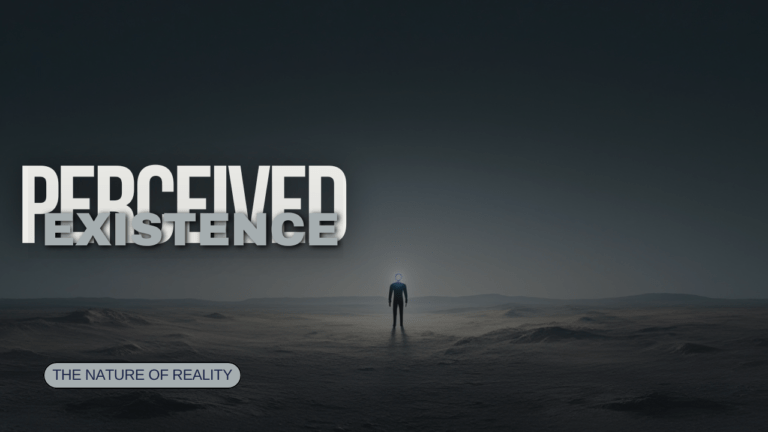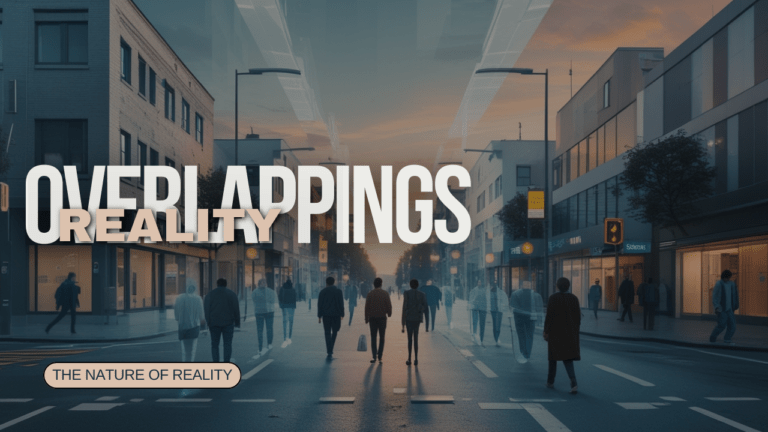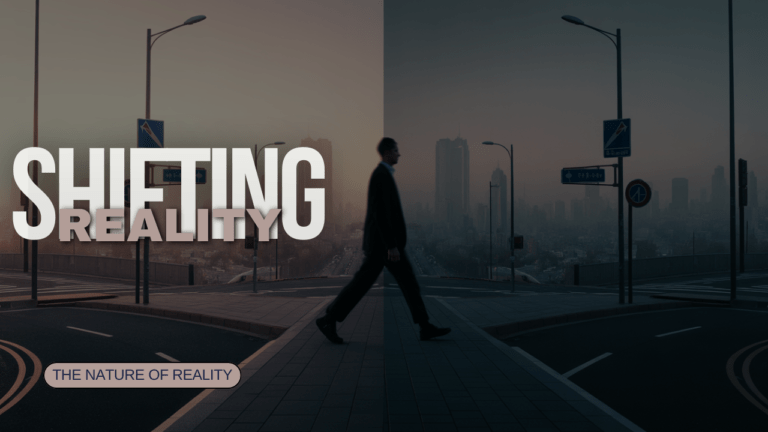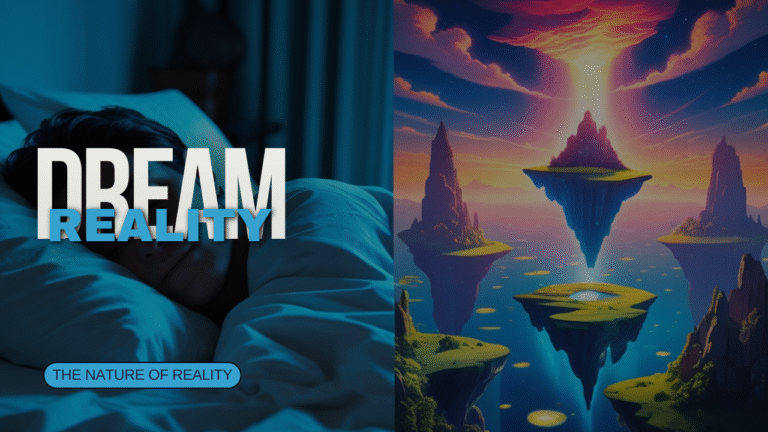
What if reality is a shared hallucination?
What if reality is a shared hallucination?
This question hits differently the longer you sit with it.
A shared hallucination sounds absurd at first. Hallucinations are supposed to be private, personal, isolated. But what if we’ve misunderstood them? What if reality itself is not a solid external structure, but a collective mental agreement? A hallucination we all participate in, reinforce, and pass down so consistently that it feels unquestionable?
After all, everything you have ever known, touched, loved, feared, or believed has arrived through one narrow gateway, your mind.
So let’s take the uncomfortable idea seriously.
What if reality is not objective truth, but a mass-coordinated experience?
What if the world feels stable only because billions of minds are dreaming the same dream at the same time?
Hallucination Does Not Mean “Fake”
The word hallucination carries baggage. It sounds like error, delusion, sickness. But neurologically, a hallucination is simply the brain generating experience without external input.
Here’s the unsettling part.
Your waking life works the same way.
The brain never directly accesses the world. It receives electrical signals and constructs an internal model. Color, sound, solidity, even time are interpretations, not raw data.
You don’t see reality.
You see a brain-generated simulation based on probability and expectation.
The only difference between a dream and waking life is consistency and agreement.
One is private.
The other is shared.
Why Shared Experiences Feel “More Real”
If you and I both see the same tree, we call it real. If only one of us sees it, we call it imaginary.
But that rule is social, not scientific.
Reality feels real because it is validated. Reinforced. Confirmed by others. Language, culture, science, and memory all act as anchors that stabilize the hallucination.
From birth, you are trained into the same perceptual framework:
- You learn which colors matter
- Which sounds have meaning
- Which objects are “real”
- Which experiences are dismissed
By adulthood, you’re no longer questioning reality. You’re maintaining it.
That’s how a shared hallucination survives.
The Brain Predicts the World Before It Sees It
Modern neuroscience suggests the brain works as a prediction engine.
It does not wait for reality to happen. It predicts what should happen next, then corrects itself slightly if it’s wrong.
That means:
- You see what you expect to see
- You hear what fits context
- You ignore most data automatically
- You fill gaps without noticing
Reality is less “incoming truth” and more educated guesswork.
Now imagine billions of brains doing this together, trained by the same physical laws, social rules, and survival needs.
That’s not chaos.
That’s coherence.
That’s a shared hallucination that behaves reliably enough to look like truth.
Physics Quietly Supports This Idea
Quantum physics doesn’t describe a solid world. It describes probabilities.
Particles do not have fixed positions until measured. They exist as possibilities, not certainties. Only when observed does a specific outcome occur.
This raises an uncomfortable implication.
What we call “reality” might be the result of collective observation, not independent existence.
In other words, the universe behaves like it is waiting for consensus.
Not one observer.
But many.
Reality might be less like a stage and more like a vote.



Culture Proves Reality Is Flexible
If reality were purely objective, cultures would experience the world the same way.
They don’t.
Time is linear in some cultures, circular in others.
Colors exist in some languages and not in others.
Pain tolerance varies wildly.
Spiritual experiences are common in some societies and rare in others.
Same biology.
Same planet.
Different realities.
That suggests reality is not discovered.
It is constructed, then shared.
Dreams Show How Easily Reality Can Be Built
In dreams:
- You accept impossible physics instantly
- You recognize people who look nothing like themselves
- You experience years in minutes
- You feel real fear, love, loss, joy
And you don’t question it.
Why?
Because the brain does not need external validation to create a convincing world. It only needs internal consistency.
Waking reality may feel different, but it follows the same rule.
It works because everyone agrees to play by it.
What If Sanity Is Just Alignment?
Consider this uncomfortable thought.
A hallucination shared by one person is called delusion.
A hallucination shared by millions is called culture.
A hallucination shared by everyone is called reality.
Mental health, then, might not be about truth, but alignment.
Being “sane” may simply mean your hallucination matches the collective one closely enough to function.
That doesn’t mean reality is false.
It means truth may be intersubjective, not objective.
Why Reality Feels Stable (Most of the Time)
If reality were a shared hallucination, why doesn’t it constantly fall apart?
Because it’s self-reinforcing:
- Physical laws limit variation
- Language stabilizes meaning
- Memory smooths inconsistencies
- Social feedback corrects deviation
- The brain filters anomalies
Reality persists not because it is rigid, but because it is maintained.
Like a song everyone keeps singing in rhythm.
Cracks in the Agreement
Sometimes, the cracks show.
- Mandela Effect memories
- Collective panic or euphoria
- Mass delusions
- Sudden cultural shifts
- Reality feeling “off” after major events
These moments feel strange because the shared hallucination wobbles.
Not enough to break.
Just enough to notice.
Key Points
- The brain constructs experience rather than receiving raw reality
- Hallucinations are internally generated realities
- Shared agreement stabilizes perception
- Quantum physics suggests reality depends on observation
- Culture proves reality is flexible and learned
- Dreams show how convincing constructed worlds can be
- Sanity may be alignment with collective perception
- Reality may be a continuously maintained consensus
Our Thoughts
If reality is a shared hallucination, that doesn’t make it meaningless.
It makes it fragile.
It makes it precious.
It makes it ours.
It means reality is not something happening to us, but something we are participating in every second, whether we realize it or not.
We are not passive observers of the world.
We are contributors.
And maybe the deepest truth is not that reality is fake.
Maybe it’s that reality is relational.
It exists because we exist together.