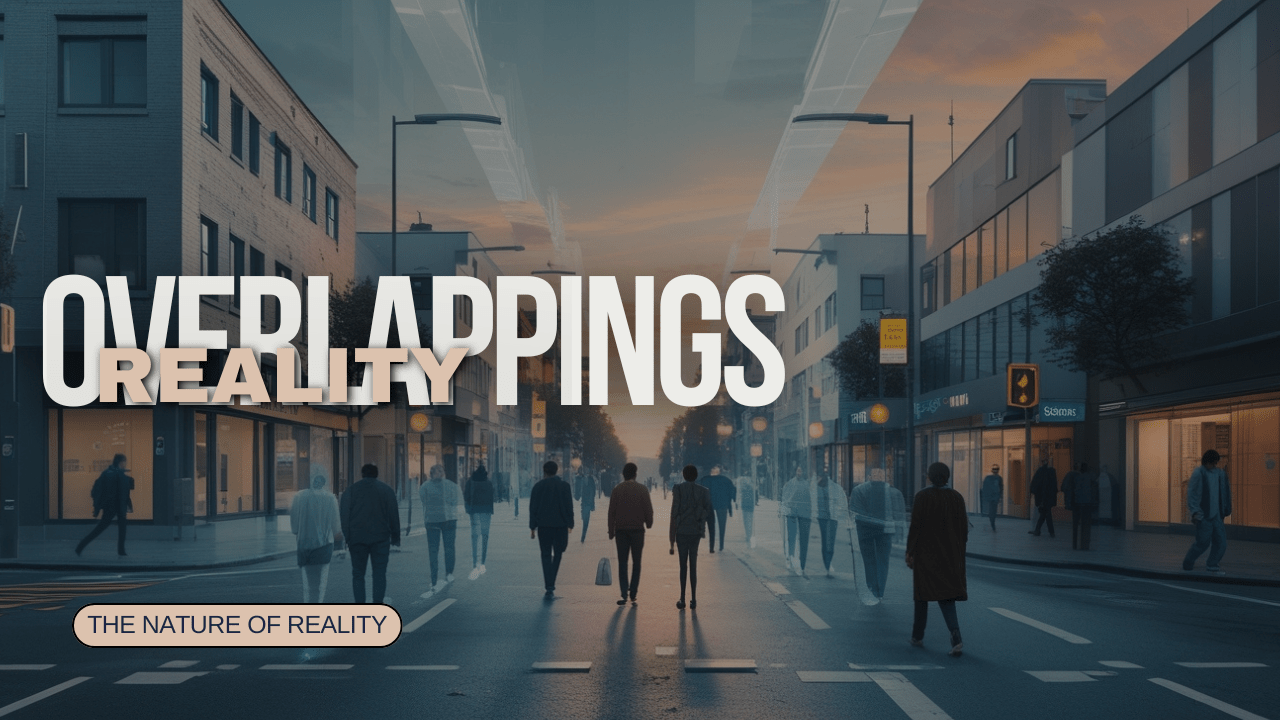
What if multiple realities overlap daily?
What if multiple realities overlap daily?
Have you ever felt like the day didn’t quite line up the way it should have?
Like conversations repeated themselves.
Like events unfolded too perfectly, or too strangely.
Like you remembered something happening one way, but the world insisted it happened another.
Most of us brush those moments off. We call them coincidence, stress, memory slips, or imagination. But what if that explanation is too simple?
What if those moments are not errors in us, but signs of something much bigger happening around us?
What if multiple realities overlap daily… and we’re living right inside the overlap?
Not jumping worlds.
Not traveling timelines.
Just quietly existing where realities blur together so smoothly we barely notice.
The Comforting Lie of a Single Reality
From the moment we’re born, we’re taught a simple idea:
There is one world.
One timeline.
One version of events.
It’s comforting. Predictable. Necessary for sanity.
But science doesn’t fully support this idea anymore.
Quantum physics, cosmology, and even neuroscience all hint at something unsettling: that reality might not be singular at all. Instead, it could be layered, overlapping, and constantly interacting with itself.
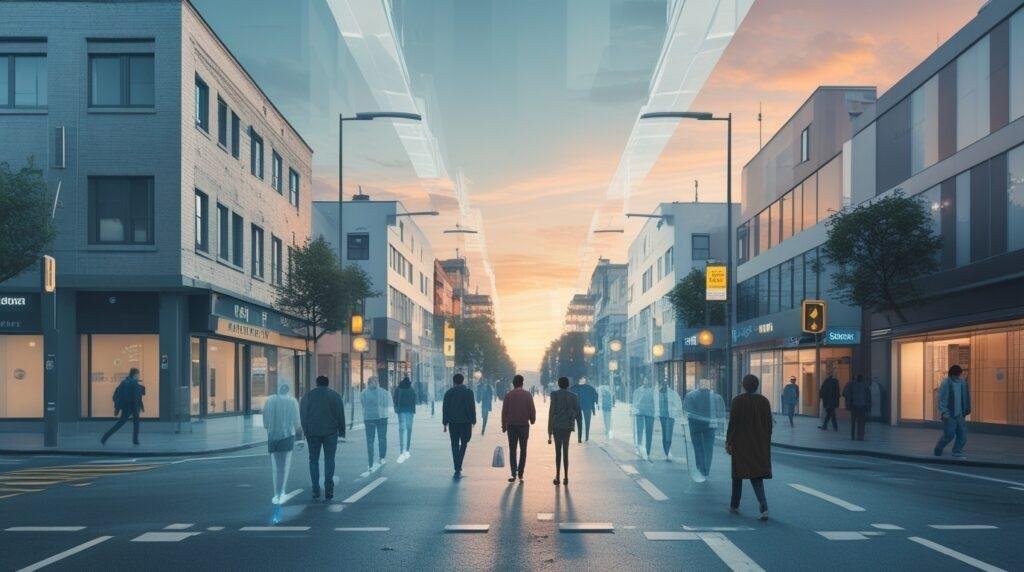
Like transparent sheets stacked together.
Or radio stations broadcasting on similar frequencies.
Or tabs open in the same browser, bleeding into each other.
If that’s true, then “your reality” might not be isolated.
It might be sharing space with countless others.
Physics Suggests Reality Is Not Cleanly Separated
According to the Many-Worlds Interpretation of quantum mechanics, every possible outcome of every event exists somewhere. Reality doesn’t choose one path, it takes all of them.
Most people imagine these realities as completely separate universes. But what if that separation isn’t as clean as we assume?
What if they overlap?
At the quantum level, particles don’t have fixed positions until observed. They exist in probability clouds, interacting with multiple possibilities at once. If matter itself can exist in overlapping states, why couldn’t entire realities do the same?
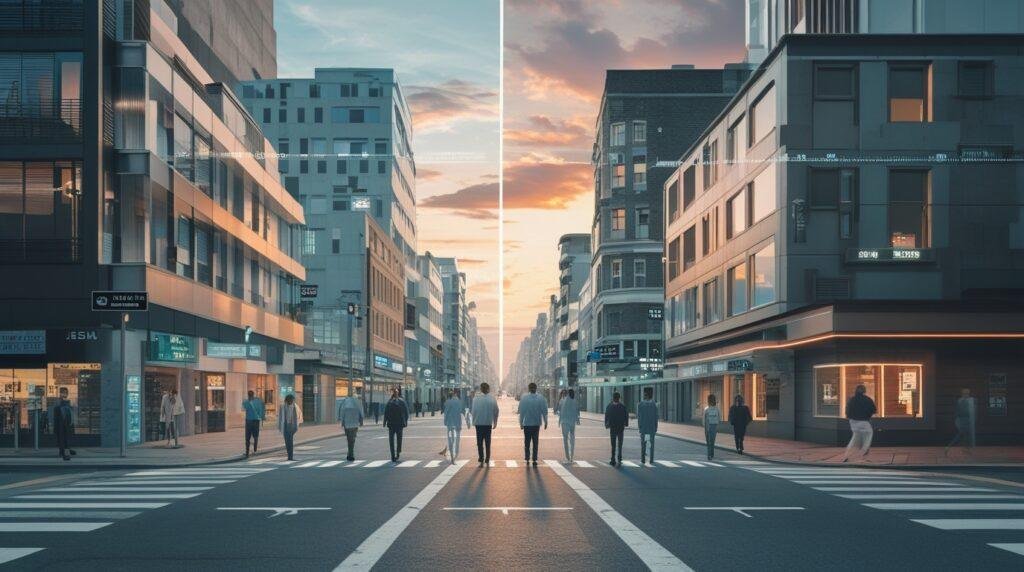
Maybe universes aren’t isolated bubbles.
Maybe they’re layers of the same fabric.
Everyday Moments That Feel Like Overlaps
People often report strange, subtle experiences that don’t quite fit normal explanations:
- Hearing your name called when no one is there
- Thinking of someone seconds before they contact you
- Remembering conversations that others swear never happened
- Experiencing intense déjà vu that feels informational, not emotional
- Noticing small details change, logos, words, layouts, timelines
- Feeling like you “almost” lived a different version of the day
Individually, these moments seem trivial.
Together, they form a pattern that’s hard to ignore.
If realities overlap daily, these moments might be micro-collisions, places where one version brushes against another.
Not enough to shatter reality.
Just enough to leave residue.
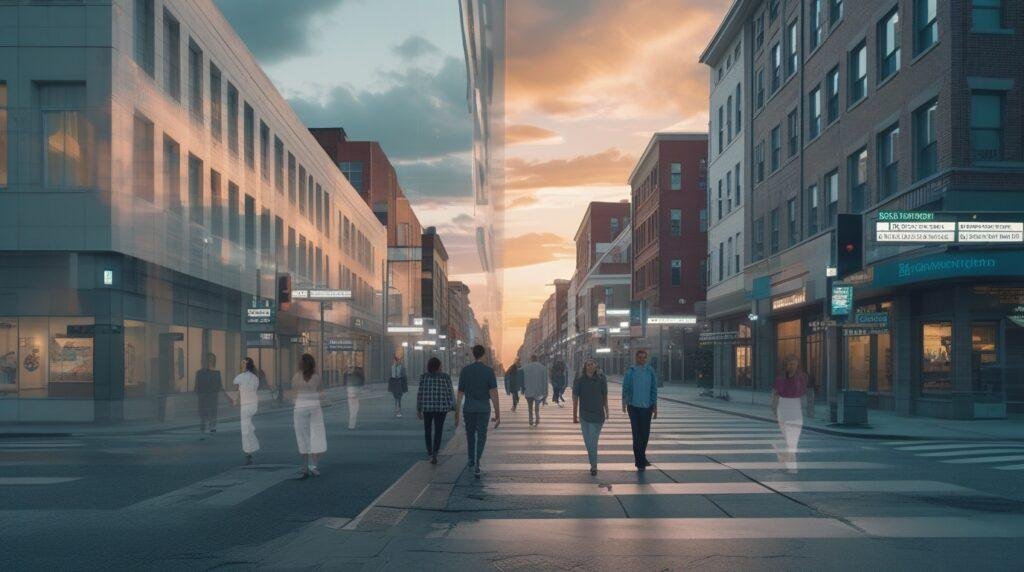
Consciousness Might Be the Overlap Point
Here’s a key idea:
What if consciousness is not bound to a single reality?
Your body exists here.
Your awareness might not.
Some theories suggest consciousness operates like a receiver, tuning into a version of reality based on conditions, attention, emotion, or probability. If nearby realities are similar enough, your consciousness might momentarily sample more than one.
That could explain why some people are more sensitive to “reality oddities” than others. Their awareness might be less tightly locked to one timeline.
They’re not imagining things.
They’re perceiving bleed-through.
The Mandela Effect as Evidence of Overlap
The Mandela Effect is often explained as mass misremembering. But that explanation gets weaker when millions of people share the same incorrect memory, down to precise details.
If realities overlap, then shared memories might be leftovers from a slightly different version of the world that used to dominate, but no longer does.
Reality updated.
Memory didn’t.
That doesn’t require dramatic timeline jumps.
Just small probability shifts where one version became more dominant than another.
Think of it like cloud saving errors between versions of the same file.
Why We Don’t Notice Overlaps Constantly
If realities overlap daily, why don’t we see chaos everywhere?
Because the brain is designed to preserve continuity.
Your mind edits perception in real time, smoothing contradictions and ignoring inconsistencies. It fills gaps, rewrites memory, and suppresses anomalies, not because it’s broken, but because that’s how survival works.
Seeing reality fracture every few minutes would destroy functionality.
So the brain does what it always does:
It protects the story.
Reality Might Be Updating All the Time
What if reality isn’t static, but versioned?
Small updates.
Tiny recalibrations.
Probability adjustments.
Most changes are insignificant. But occasionally, a detail shifts just enough for someone to notice.
A name.
A face.
A memory.
A decision that feels “wrong” in hindsight.
Not because you chose poorly, but because another version of you chose differently in a nearby reality.
And for a moment, both outcomes overlapped.
Collective Overlap and Shared Experience
If multiple realities overlap, then collective consciousness matters.
When enough people believe, expect, or focus on a version of reality, it may gain dominance. That’s not magic, it’s probability reinforcement.
Cultural myths.
Social narratives.
Shared fears.
Mass expectations.
These may act like gravity wells, pulling reality toward certain outcomes while weakening others.
Reality might not be dictated by one mind, but by many, overlapping constantly.
Key Points
- Quantum physics allows for multiple realities existing simultaneously
- These realities may overlap rather than remain isolated
- Consciousness could move within overlapping probability fields
- Mandela Effects may be memory residue from overlapping realities
- The brain suppresses contradictions to maintain continuity
- Reality may update gradually, not abruptly
- Daily life might exist in a shared overlap zone of multiple worlds
Our Thoughts
If multiple realities overlap daily, then the world is far more fluid than we’re taught. History, memory, identity, all become living processes instead of fixed truths.
That’s not frightening.
It’s liberating.
It means mistakes aren’t final.
It means possibilities never truly die.
It means every moment holds more depth than we can see.
Maybe you’re not imagining things when something feels off.
Maybe you’re not broken.
Maybe you’re just aware enough to notice the seams.
And maybe reality isn’t a single road at all,
But a crowded intersection every day without realizing it.
🔗 Related Articles from EdgyThoughts.com
🌐 External Resource
Learn more about parallel worlds and quantum interpretations:
https://en.wikipedia.org/wiki/Many-worlds_interpretation
One Comment
Comments are closed.