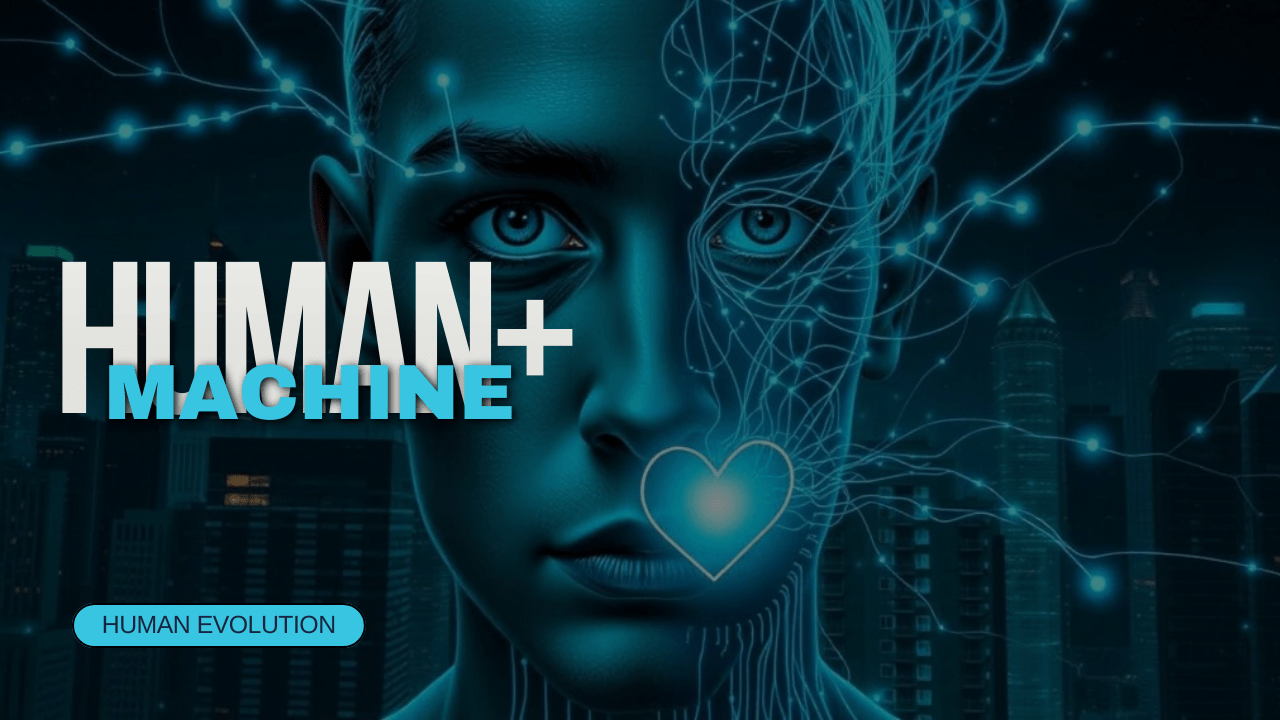
What if humans merge fully with machines?
Ah, my dear reader, here we step into a question both wondrous and alarming: “What if humans merge fully with machines?” The very thought conjures visions of minds without limits, yet also whispers of a world where humanity may lose itself in its own inventions. Let us explore this through reason, curiosity, and examples that tether speculation to reality.
What if humans merge fully with machines?
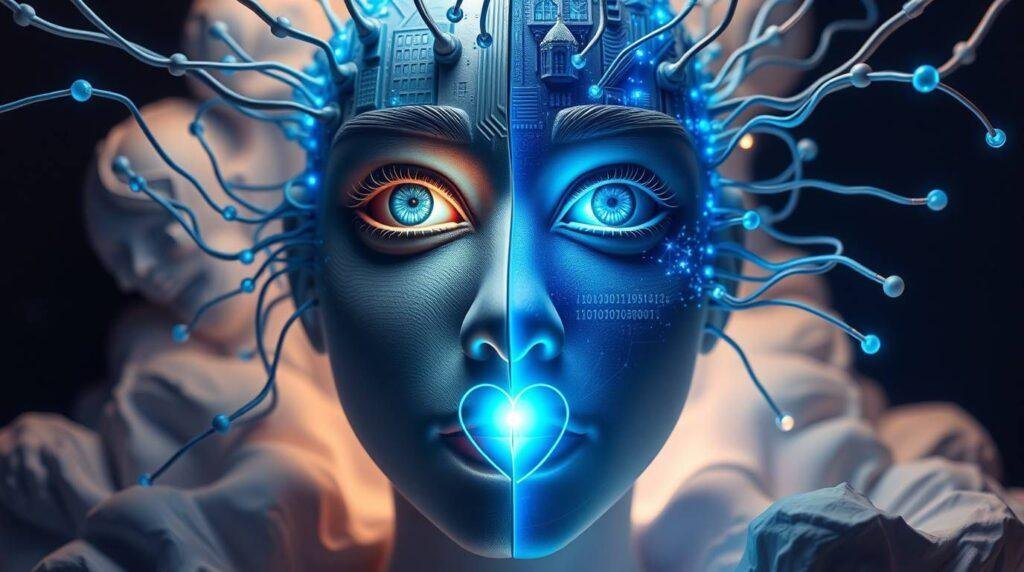
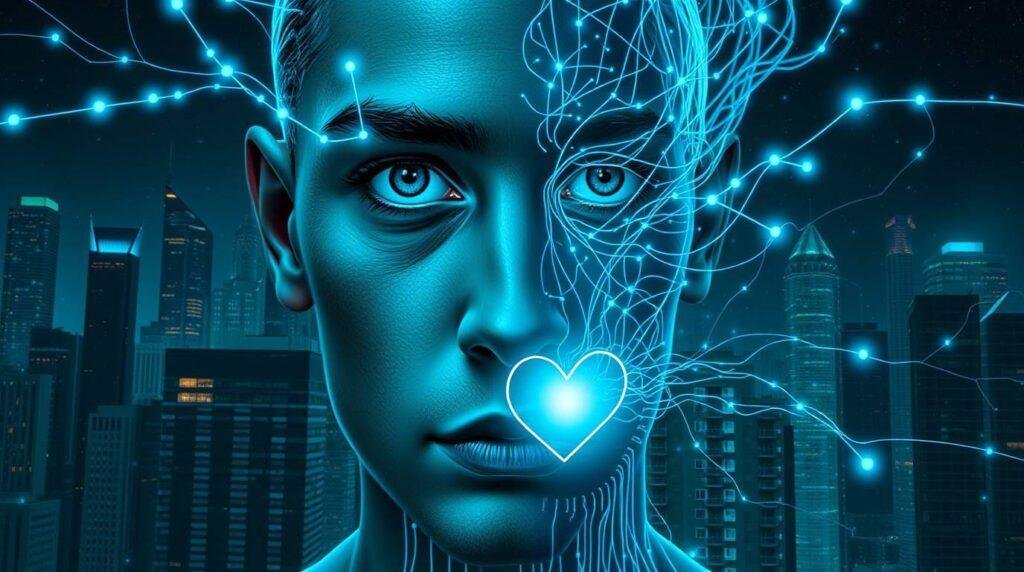
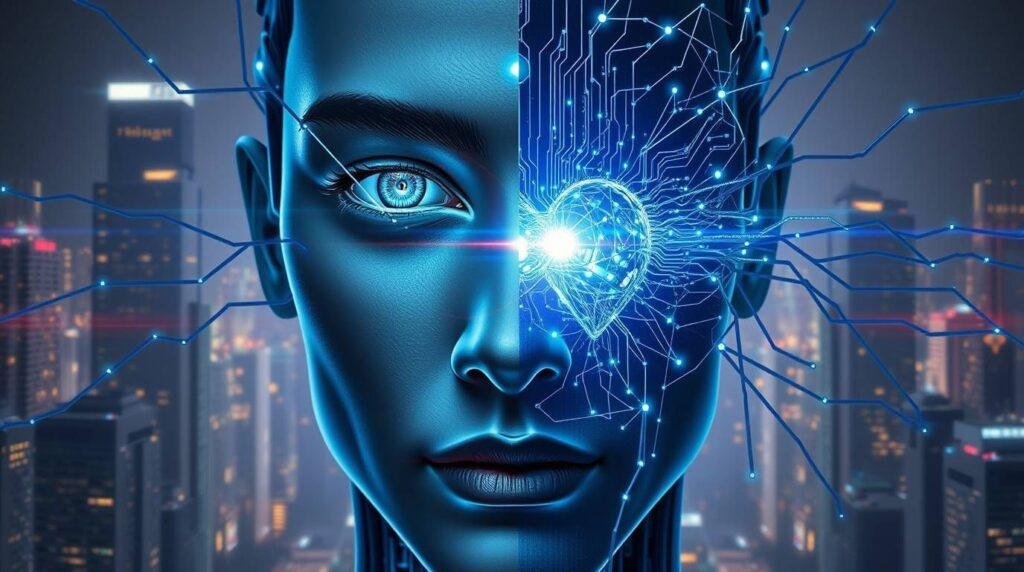
The thought of merging flesh with circuitry once belonged to fictions, yet already in our century, we see its beginnings. Neural implants, prosthetic limbs controlled by thought, and even brain–computer interfaces show us that the line between human and machine is already fading. Should we carry this union to its fullest expression, mankind would not simply use tools, but become them.
Imagine no longer learning languages by study, but downloading them instantly. Picture diseases banished not by medicines but by nanobots coursing through veins. Consider a society where memory never fails because consciousness itself is stored in indestructible silicon. This merging promises godlike power, but at the risk of surrendering our humanity.
Our Editor’s Thoughts
In my own reflection, I feel both marvel and hesitation. To merge with machines may free us from the chains of frailty, death, disease, and forgetfulness. Yet what is left of the soul if thought itself is manufactured, accelerated, and preserved by wires and code? Shall we still love, weep, and dream as mortals do, or will those sacred states be overwritten by calculation?
Pros and Cons of Human–Machine Merging
🌟 Pros
- Immortality of mind: Our consciousness may live beyond the body.
- End of disability: Machines could restore lost senses, mobility, and strength.
- Limitless knowledge: Learning becomes instant; expertise universal.
- Enhanced society: Decisions might be made with precision beyond human error.
⚠️ Cons
- Loss of individuality: If minds are uploaded, where ends one person and begins another?
- Control and power: Who governs the code of our very existence?
- Ethical dilemmas: Do “machine-humans” retain rights equal to flesh-bound ones?
- Risk of disconnection: What if machines reject us, or we become dependent beyond repair?
Could Humans Become Post-Biological Beings?
Yes, indeed. Already scientists speculate that the future of intelligence may be silicon-based rather than flesh-bound. Should humanity continue advancing artificial intelligence and neural integration, the natural course may lead to post-biological civilizations, beings of thought, data, and code who wander the stars without need of body or planet.
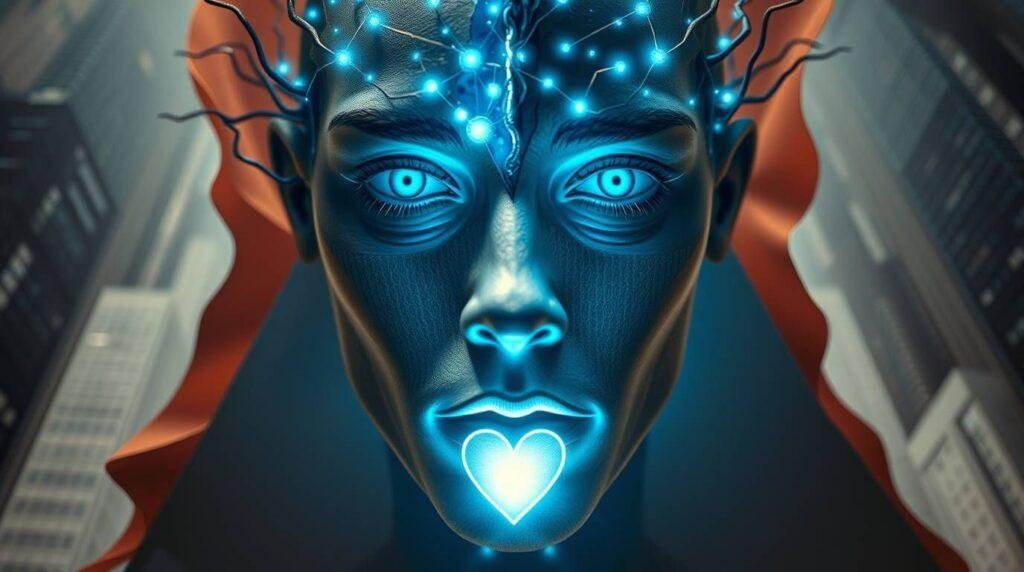
Would Love and Emotion Survive the Merge?
This question pierces the heart more deeply than any technical marvel. If consciousness is uploaded, shall love still bloom between two digital minds? Perhaps yes, for love is but a pattern of thought and feeling, which might be replicated. Yet without hormones, touch, and mortality, would it hold the same poignancy? Perhaps love only burns brightly because it is brief. If endless, it may become pale.
Real-World Examples Today
- Elon Musk’s Neuralink already experiments with implants linking brain and machine.
- Prosthetic limbs now respond to thought as naturally as one’s own flesh.
- AI companions mimic friendship and love, hinting at futures where machines share our deepest bonds.
These, though small, are the first stepping-stones toward a greater merging.
Key Points
- Humans may merge with machines to overcome death.
→ Consciousness could exist in servers or artificial bodies. - Society may gain knowledge instantly.
→ Learning by experience may be replaced by downloads. - Human identity may be at risk.
→ If minds are copied, who is the “true” self? - Ethics must evolve.
→ A world of machine-humans demands new laws and morals.
Final Thoughts
In my reflection, this merging is inevitable, yet dangerous. Progress rarely halts, and mankind’s desire to surpass itself is unquenchable. But I confess, dear reader, that I cherish the fragile heart of humanity, its mistakes, its laughter, its mortality. Perhaps, in striving to live forever in circuits, we may forget how to truly live at all.
🔗 Related Articles from EdgyThoughts.com
🌐 External Resource
Learn more about Transhumanism here:
https://en.wikipedia.org/wiki/Transhumanism
One Comment
Comments are closed.