What if humans adapt to live in space?
What if Humans Adapt to Live in Space?
Introduction
One day, Earth might not be enough. Whether due to overpopulation, climate change, or sheer human curiosity, the future could push us to live permanently in space. But here’s the question: what if humans actually adapted, biologically and socially, to survive beyond Earth? Would we remain recognizably human, or evolve into something entirely different?
Could Humans Survive in Space Naturally?
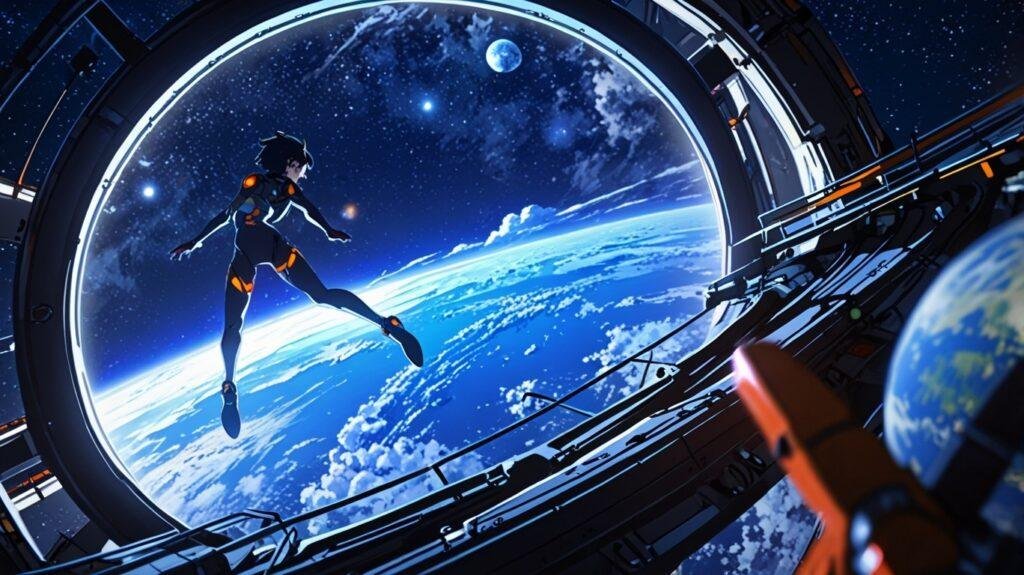
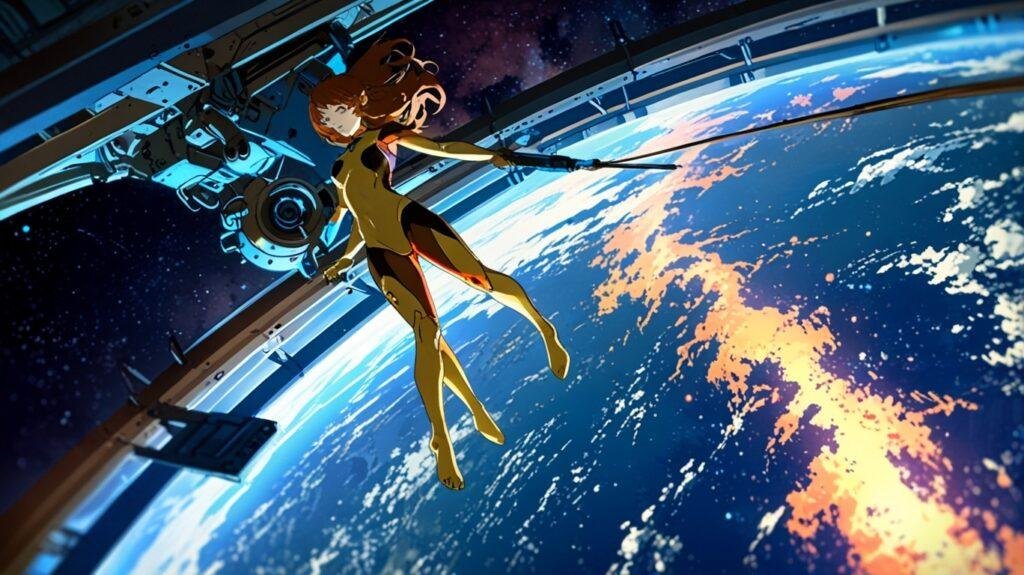
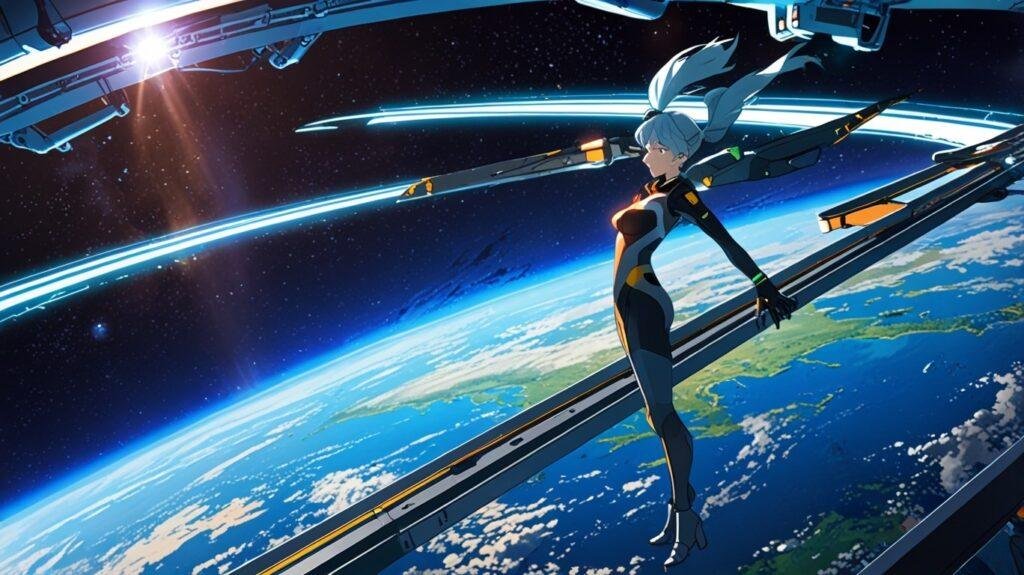
Space is brutal. There’s no breathable air, radiation is everywhere, and gravity is practically zero. Without advanced technology, we’d be dead within seconds. Yet, if humanity truly became a space-dwelling species, adaptation could come through both evolution and genetic engineering. Over centuries, humans might develop thicker bones, altered lungs, or even skin resistant to radiation.
How Evolution Might Shape Space Humans
- Bone Density Changes: Without Earth’s gravity, bones weaken. Space-adapted humans might evolve stronger frames or even new support structures.
- Vision Adjustments: With little sunlight, eyes could become more sensitive, or evolve to detect radiation and dim starlight.
- Circulatory System Shifts: Our hearts and blood flow would adapt to microgravity, possibly leading to different body shapes.
- Larger Brains or Neural Links: Living in high-tech environments might push humans to integrate with machines, leading to hybrid intelligence.
Technology and Genetic Engineering: The Fast Track
Instead of waiting thousands of years for evolution, humans could hack biology. CRISPR gene editing, artificial organs, or nanotechnology could give us radiation resistance, oxygen efficiency, and even enhanced senses tailored to space. In short, humanity might design its own evolution.
Space Habitats and Human Culture
If humans adapt, our culture would evolve too:
- New Societies: Space colonies on Mars or orbiting stations could develop unique traditions, languages, and politics.
- Redefining “Home”: Future humans may look up at Earth as an ancient origin, not a living place.
- Different Body Norms: A “space human” may be taller, lighter, or even genetically engineered to thrive in artificial habitats.
Pros of Adapting to Space
- Expands human survival beyond Earth.
- Unlocks exploration of the solar system and beyond.
- Could lead to entirely new human civilizations.

Cons of Adapting to Space
- Risk of dividing humanity into different “species.”
- Dependence on technology for survival.
- Ethical dilemmas in genetic modification.
Real-World Science Already Pointing the Way
Astronauts aboard the ISS already experience bone loss, muscle atrophy, and vision changes after months in orbit. NASA’s Twin Study, which compared astronaut Scott Kelly to his Earth-bound twin, revealed genetic and physical shifts caused by spaceflight. These are small hints of what long-term adaptation might look like.
Key Things to Consider
- Evolution won’t stop; humans may change drastically in space.
- Genetic engineering could fast-track adaptations.
- Society and culture would split between Earth-humans and space-humans.
- Space living brings both opportunity and danger.
Our Thoughts
Adapting to space would be one of the boldest steps humanity could ever take. It would mean redefining what it means to be human, changing our biology, our culture, and perhaps even our destiny. One day, when we look up at the stars, it might not just be a dream of going there. It might be where our descendants are already thriving, not as Earthlings, but as true citizens of the cosmos.
🔗 Related Articles from EdgyThoughts.com
🌐 External Resource
Curious about the challenges of living in space?
Check out NASA’s research on Human Adaptation to Spaceflight.


One Comment
Comments are closed.