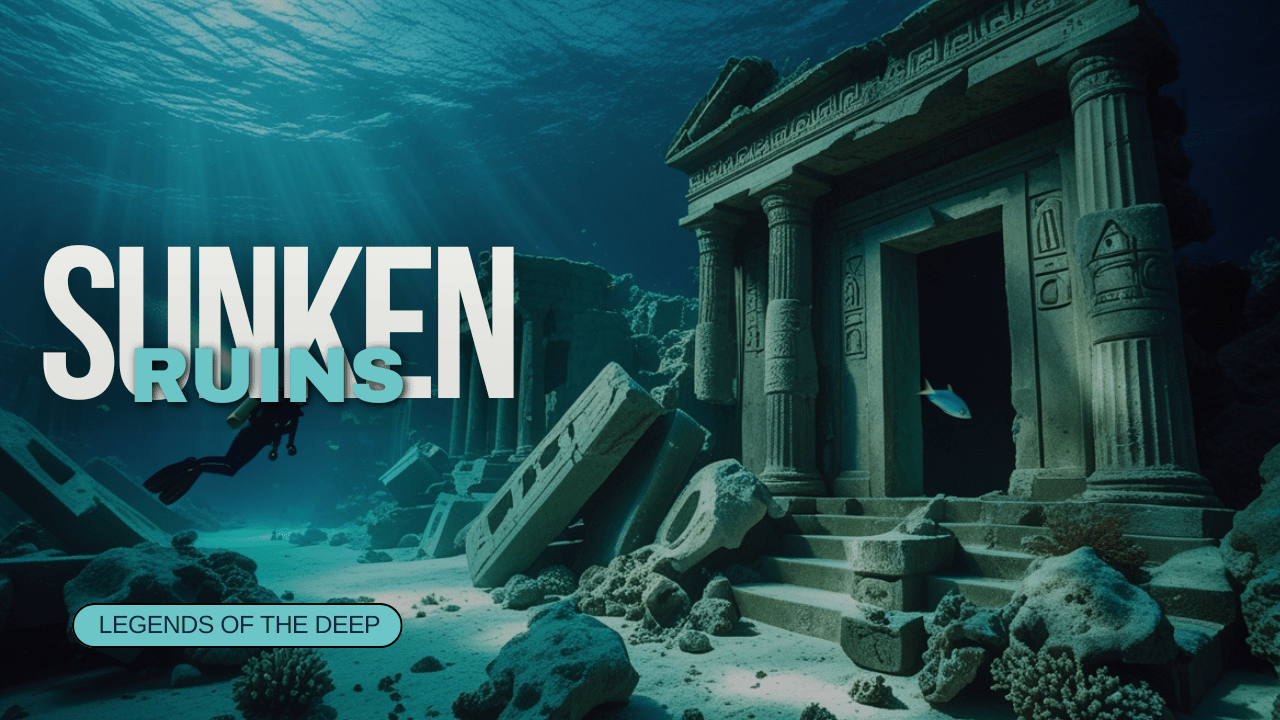
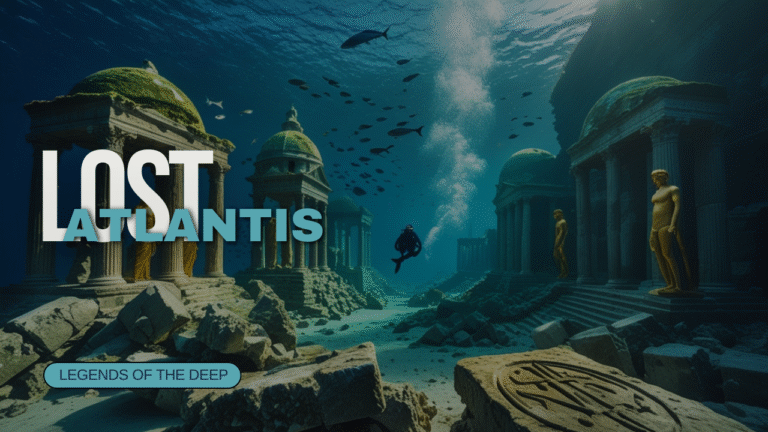
What if ancient ruins rest on the seafloor?
What if ancient ruins rest on the seafloor?
There’s something eerily poetic about the thought that entire civilizations might be sleeping beneath the waves, that while we go about our lives above the surface, the ocean floor could be hiding the bones of cities older than time itself. We’ve always assumed the past is buried under dirt and sand, but what if the deepest truths about humanity are resting quietly at the bottom of the sea?
It’s not such a wild thought anymore. Over the last few decades, archaeologists, divers, and satellite scanners have stumbled upon strange formations, submerged pyramids, and even what appear to be entire city grids lying hundreds of feet below water. Some of these discoveries line up with ancient myths, others defy explanation altogether. So maybe, just maybe, the ocean is holding secrets far greater than we’ve dared to imagine.
🌊 Could Whole Civilizations Have Been Lost Beneath the Sea?
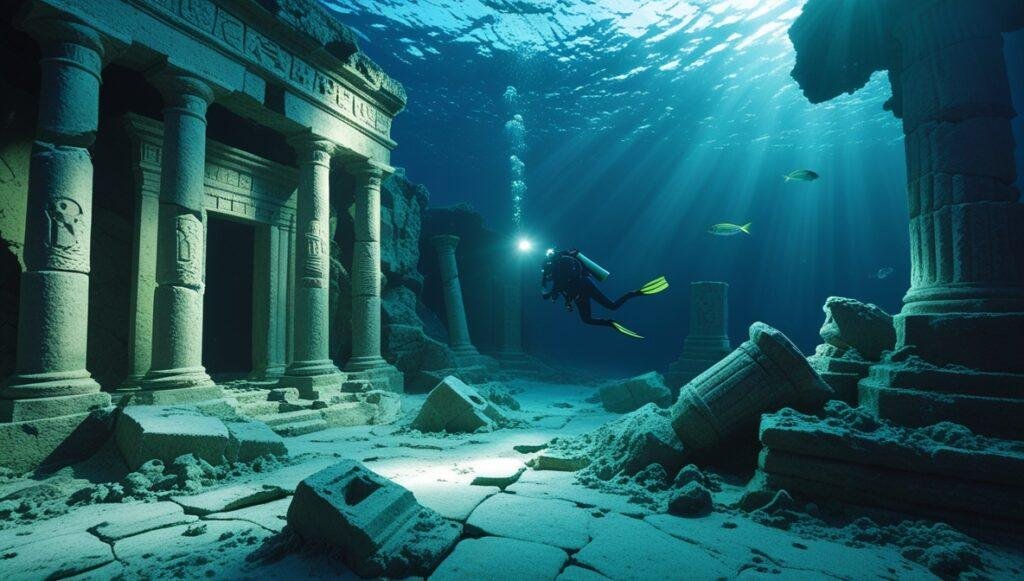
Imagine this: thousands of years ago, before the written word, human settlements may have thrived along coastlines that today lie far beneath the waves. During the last Ice Age, much of Earth’s water was locked up in glaciers, meaning the sea levels were lower by over 400 feet. When those glaciers melted around 12,000 years ago, rising tides swallowed entire regions, and with them, any trace of the people who lived there.
What if some of those people weren’t primitive at all? What if they had knowledge, culture, and technology that disappeared underwater, leaving behind only the faintest whispers in mythology?
🏝️ The Lost Cities We’ve Already Found
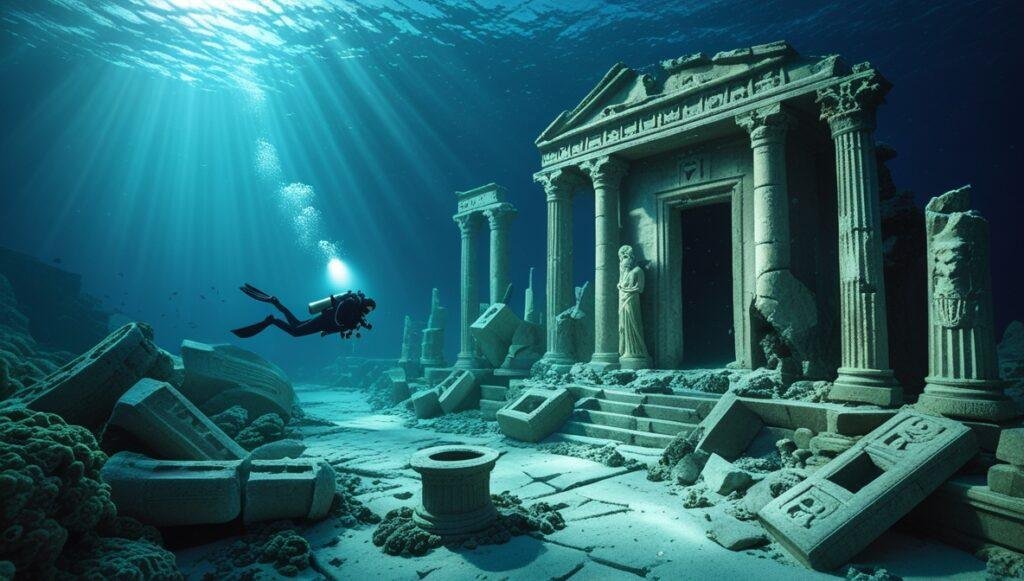
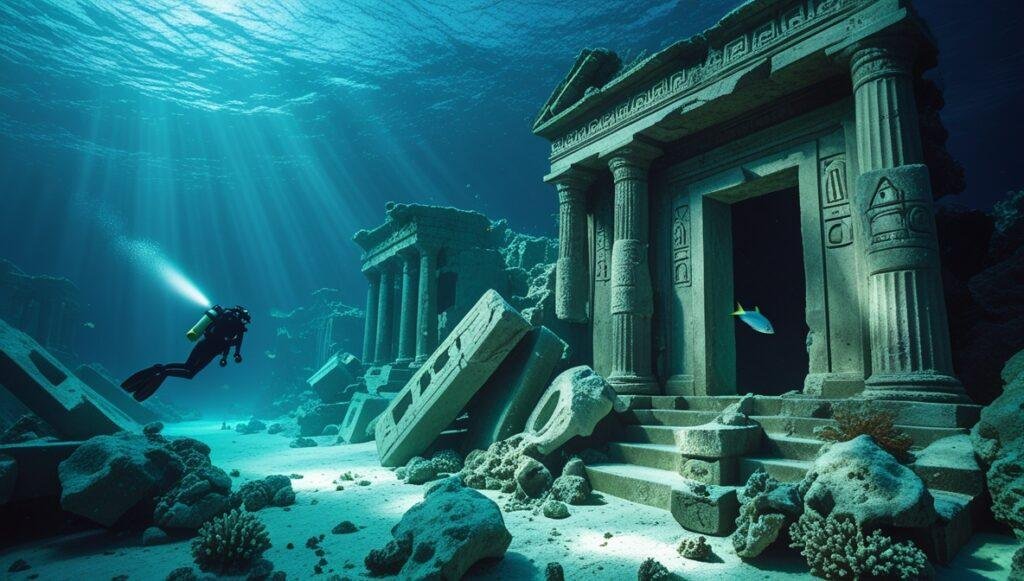
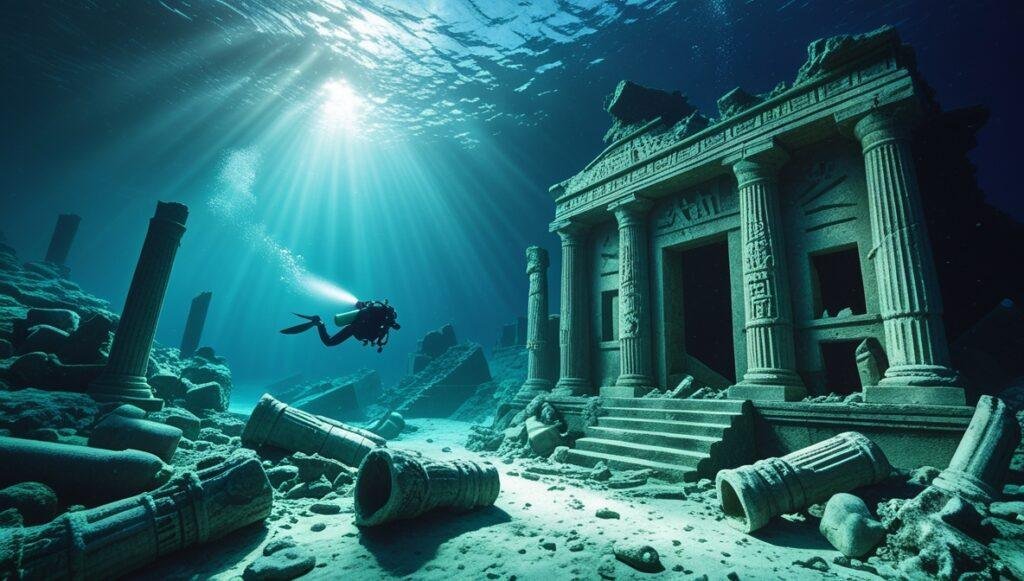
Let’s not forget, we have already found underwater ruins that shouldn’t exist.
1. Dwarka, India
Off the coast of Gujarat lies Dwarka, one of India’s oldest and most mysterious underwater cities. Found about 120 feet below the surface, it’s filled with stone walls, sculptures, and tools, all dated to around 9,000 years ago. That’s older than the pyramids of Egypt. Ancient Hindu texts describe Dwarka as the city of Lord Krishna, which “sank into the sea” after his death. For centuries, it was considered a myth. Until divers found it.
2. Yonaguni Monument, Japan
Discovered in 1986, the Yonaguni Monument lies off the coast of Japan. Massive stone steps, pillars, and terraces stretch across the seafloor, eerily resembling a human-made temple complex. Some scientists say it’s a natural formation. Others, including marine geologist Dr. Masaaki Kimura, argue it’s the remains of an ancient civilization, possibly the fabled continent of Mu, Japan’s version of Atlantis.
3. Cuba’s Mysterious City
In 2001, researchers using sonar technology found geometric stone structures nearly 2,000 feet beneath the surface off the coast of Cuba. The images revealed shapes resembling pyramids and roads covering a large area. The discovery stunned scientists because those depths would have been dry land at least 50,000 years ago, long before “civilization” was supposed to exist.
4. The Bimini Road, Bahamas
In the Caribbean, divers discovered the Bimini Road, a half-mile-long series of massive, precisely shaped limestone blocks sitting on the ocean floor. Some say it’s a natural formation, others believe it’s the last remnant of Atlantis, or perhaps a harbor built by an ancient seafaring people who vanished before recorded history.
Each of these sites challenges the official story of how old human civilization really is.
🧩 What If These Ruins Are Older Than We Think?
If these ruins were truly man-made, their age would rewrite history. Humanity might not have started building cities 5,000 years ago as textbooks say. We might have built them 15,000 or even 30,000 years ago, only to lose them to rising seas after cataclysmic floods, perhaps the very floods described in legends across cultures.
Almost every ancient story speaks of a great deluge:
- Noah’s Ark in the Bible.
- Utnapishtim’s flood in the Epic of Gilgamesh.
- Deucalion’s flood in Greek mythology.
- Manu’s flood in Indian texts.
Were they all exaggerating the same real event? And if so, what civilizations were washed away in those waters?
🕰️ Are These the Real “Atlantis”?
Every discussion of underwater ruins eventually returns to Atlantis, Plato’s tale of a grand island civilization that fell beneath the ocean “in a single day and night of misfortune.” Historians have long dismissed it as allegory, but what if it was based on something real?
Maybe Atlantis wasn’t one city, but a collective memory, an echo of all those coastal civilizations lost to the sea. The similarities between ancient flood myths and Plato’s description are too close to ignore. A powerful society, advanced for its time, wiped out by a sudden global catastrophe, it’s a pattern humanity remembers even when written history forgets.
🧠 Could There Be More We Haven’t Found?
Modern technology is just beginning to scratch the surface. With LiDAR, deep-sea drones, and satellite imaging, we’ve started mapping the seafloor in ways that were impossible before. And already, we’re finding geometric anomalies, rectangular grids, and what look like ancient harbors buried under silt and coral.
It’s humbling to realize that we might be living at the edge of another great discovery, one that proves our ancestors were far more advanced, far earlier, than we ever believed.
If lost cities are truly lying beneath the waves, what might we learn from them? Could they hold forgotten knowledge, technologies, languages, or even philosophies that predate everything we know?
🔑 Key Points
- Global Flood Evidence: Geological records show massive sea level rise around 12,000 years ago.
- Existing Discoveries: Ruins in India, Japan, and Cuba hint at pre-Ice Age civilizations.
- Mythical Parallels: Ancient flood stories may be historical memories of real events.
- Technological Anomalies: Some underwater sites suggest architectural precision hard to explain.
- Modern Exploration: Advanced sonar and mapping tools are uncovering new underwater anomalies each year.
💭 Our Thoughts
It’s strange, isn’t it? We’ve been looking to the stars for signs of ancient life, while the evidence might be lying right under our oceans. Maybe our greatest ancestors didn’t vanish; maybe they just sank with the tides, waiting for us to rediscover them.
Every wave that crashes on the shore could be touching the roof of an ancient home. Every diver exploring the deep might be drifting over streets once filled with laughter, firelight, and song.
Perhaps the past isn’t gone at all. It’s just resting quietly at the bottom of the sea, whispering stories we’ve forgotten how to hear.
🔗 Related Articles from EdgyThoughts.com
🌐 External Resource
Want to learn more about underwater archaeology and lost cities? Visit:
https://en.wikipedia.org/wiki/Underwater_archaeology

One Comment
Comments are closed.